Design
1. Overview
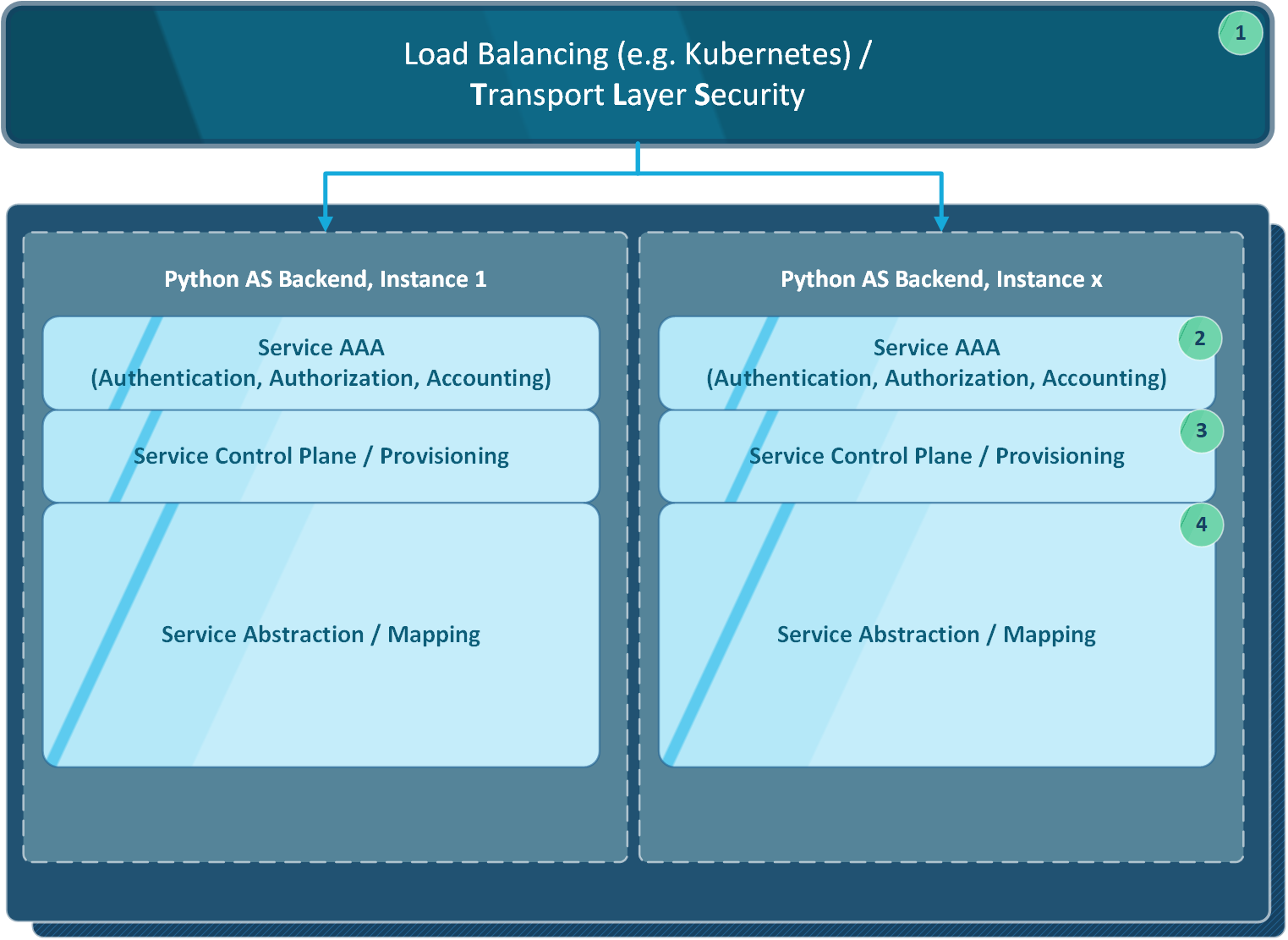
The following diagram illustrates the Base Layout / Model of a scalable SOA / ESB Infrastructure:
Load Balancing Layer (1)
Transport Layer Security Layer (1)
AAA (Authentication, Authorization, Accounting) Layer (2)
Service Control Plane / Provisioning Layer (3)
Service Mapping / (Python) OOP Abstraction Layer (4)
Note
The microesb module focuses on the “Service Mapping / Abstraction Layer” (4).
2. Centralized Service Management
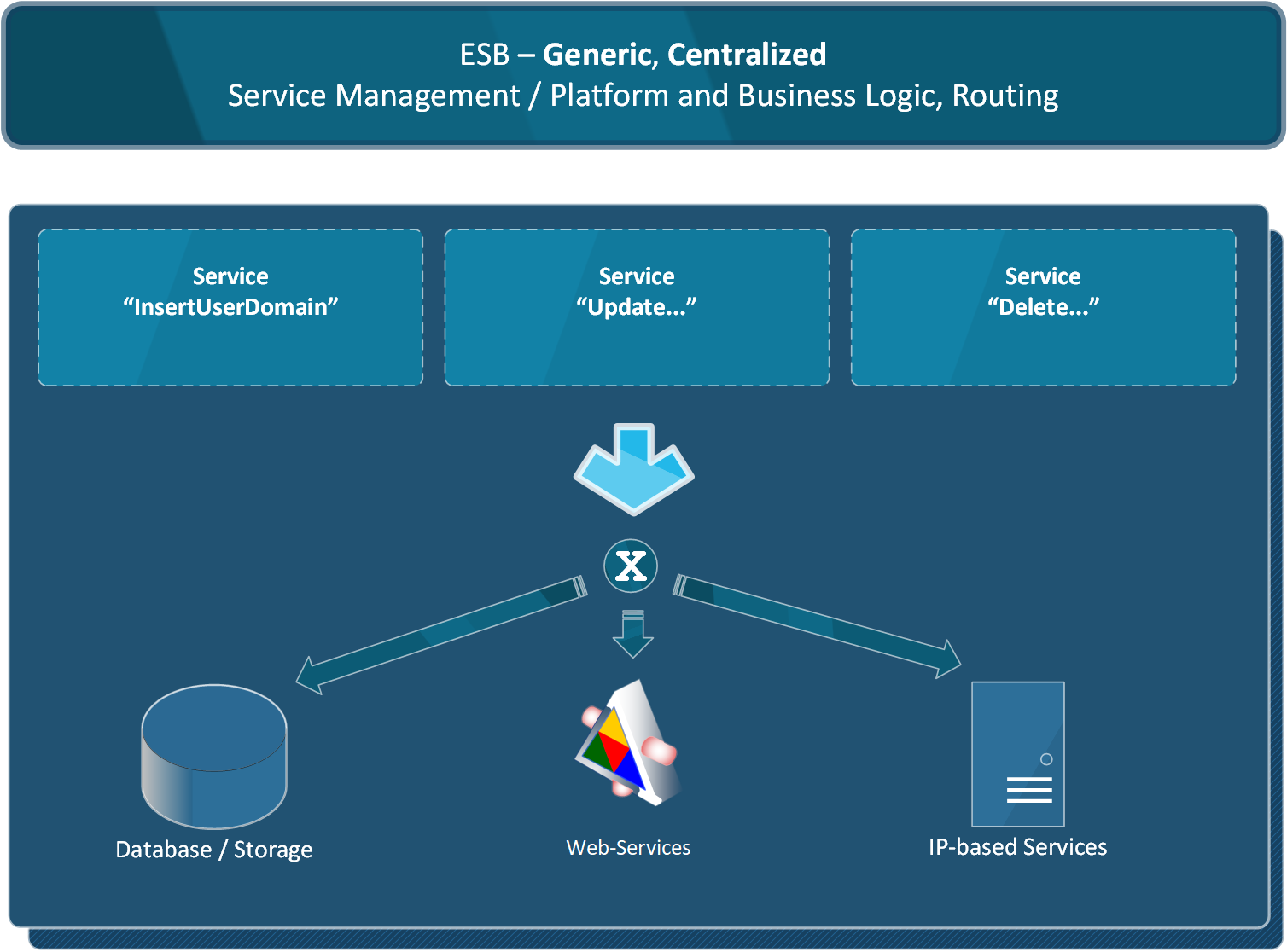
As IT infrastructures grow larger, it becomes increasingly important to establish a generic, centralized Service-Oriented Architecture (SOA).
2.1. Implementation Workflow
The typical workflow in a CI-driven, iterative, and agile development process is as follows:
Build Infrastructure
Build Application
Test
Deploy
Maintain
2.2. Standards / Generic Approach
The goal should be to minimize the effort required for point 1 (infrastructure) and the resulting periodic recurring costs.
The better Standards / Infrastructure Templates are organized, the more developers can focus on the Development Process. In large, agile development teams, it is crucial to adapt the IP infrastructure to constantly changing needs without unnecessary (and sometimes bureaucratic) effort.
A well-designed, documented, automatically updated, centralized, and generic Service Registry component within the SOA can significantly reduce complexity and help developers avoid many challenges.
Note
Achieving this requires substantial RFC / standardization work.
2.3. External Service Integration
It is also important to consider the numerous external (rented) services that need to be managed at various levels within the organization, such as:
Metrics / Statistics
Authentication
Monitoring
Note
Wrapping these external services into a centralized SOA could also be a beneficial approach.
3. Service Mapping
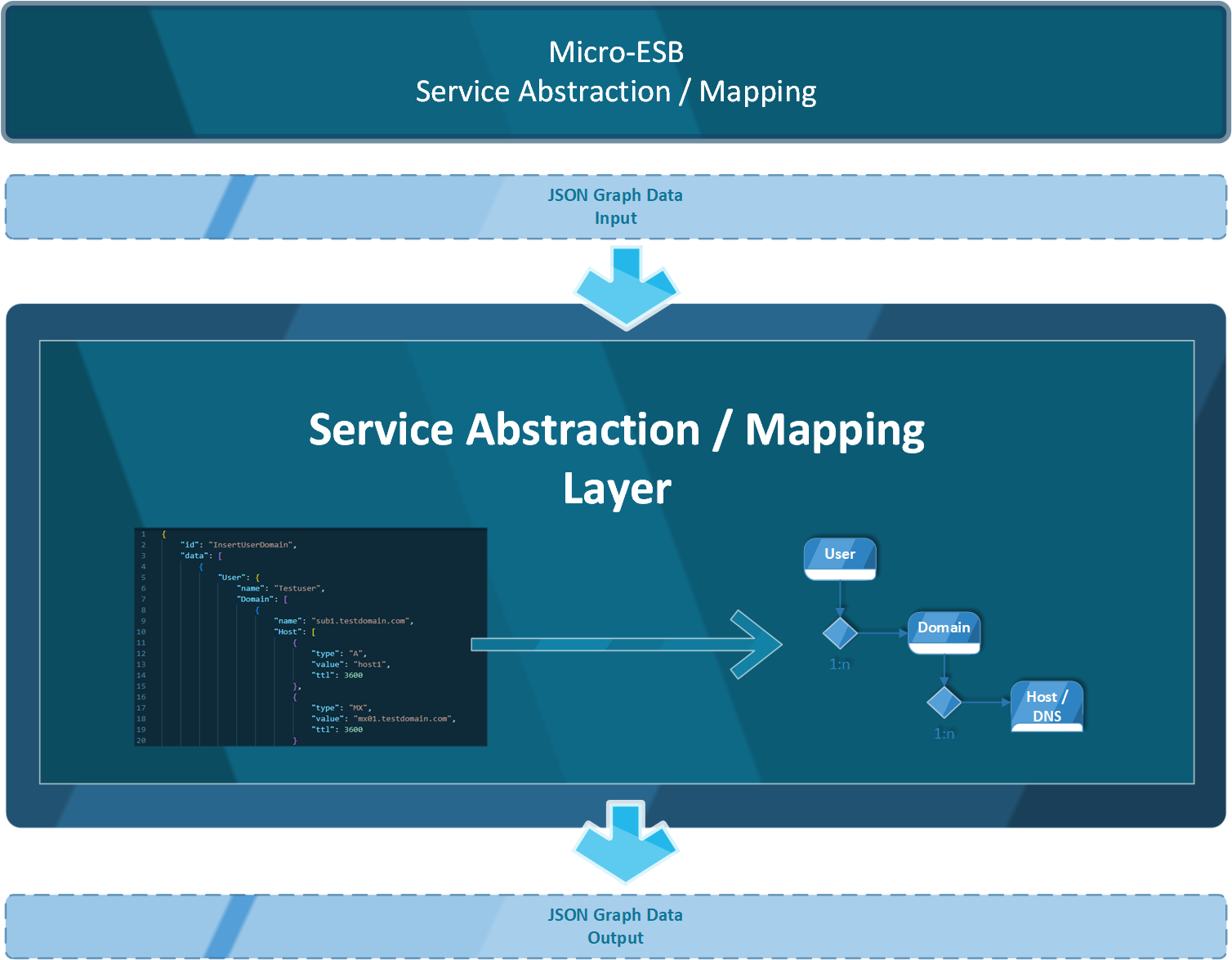
The primary focus of the Python microesb module is to map a clean JSON metadata service schema to internal OOP-based Python class instances and methods.
Note
For a detailed example that includes transactional database access, refer to Example 1. Example 2 demonstrates a NoSQL approach using MongoDB.
4. Platform As A Service
In summary, the points outlined above represent the basic requirements for running a Platform as a Service (PaaS) infrastructure efficiently.